
Understanding the Benefits of Recording Your DD214 with the County Recorder

Updated: Feb 8
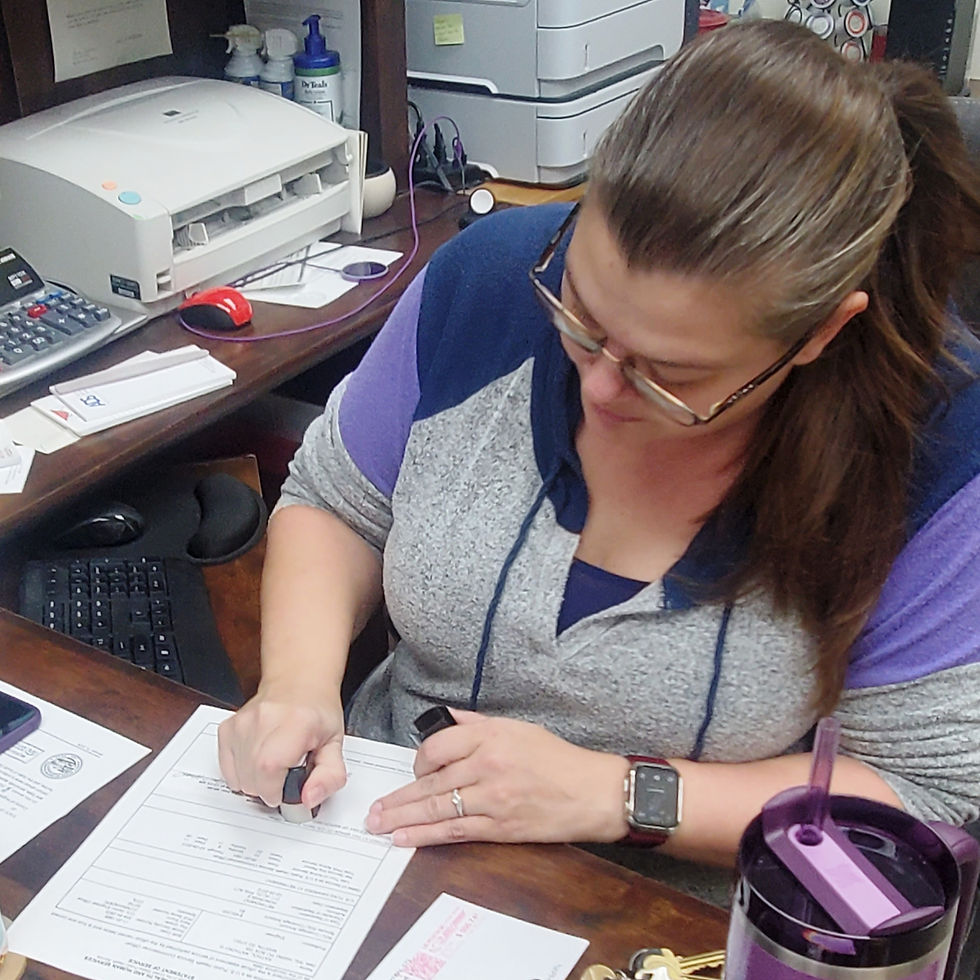
Today, I want to follow up on my previous blog post regarding the conversation I had with the Bennett County Register, Jaci Clifford, on February 4, 2026. Jaci mentioned to me that she is responsible for recording 2000 different recordable documents. I had no idea that her office recorded other documents other than just liens, mortgages, deeds, and marriage licenses. For example, did you know that as a veteran, you can have your DD214 recorded at the Bennett County Register of Deeds for free? It's true. I took advantage of this free service today.

For those of you who do not know, when veterans separate from military service, they receive a DD214 form, officially known as the Certificate of Release or Discharge from Active Duty. This document is essential for accessing veteran and survivor benefits, proving military service, and handling various legal and administrative matters.
Fourteen years ago, I retired from active duty after 21 years of service in the Commissioned Corps of the U.S. Public Health Service as an Engineer Officer. Within two years of my retirement date, I attended a retirement seminar, and none of the personnel involved with the training informed me about the significance of having my DD214 form recorded at my local county recorder's office. I have always kept my original copy in my safe; however, many veterans do not realize that recording their DD214 with the county recorder offers significant advantages. This post explains why recording your DD214 is a smart step and how it can protect your rights and simplify future processes.
What Does Recording a DD214 Mean?
Recording a DD214 means officially filing a copy of your discharge papers with the county recorder’s office in your local jurisdiction. By recording your DD214, you create a permanent record of your active-duty service that will be accessible when needed.
Why Veterans Should Consider Recording Their DD214
Easy Access to Proof of Service
One of the biggest benefits of recording your DD214 is having easy access to proof of military service. Veterans often need to provide their DD214 for benefits applications, employment verification, or legal matters. If the original document is lost, damaged, or misplaced, having a recorded copy with the county recorder ensures you can obtain a certified copy quickly without delays.
Protection Against Loss or Damage
The DD214 is a critical document, but it can be lost due to natural disasters, fire, theft, or simple misplacement. Recording your DD214 creates a secure backup stored by the county. This reduces the risk of permanently losing your proof of service. For example, if your home floods or you move frequently, the recorded copy remains safe and retrievable.
Simplifies Benefit Claims and Legal Processes
Many veteran benefits require submitting a DD214 as part of the application process. Having a recorded copy can speed up claims for VA benefits, state veteran programs, or military retirement benefits. Additionally, courts and government agencies often accept recorded documents as official proof, which can simplify legal proceedings related to veteran status.
Supports Family Members and Survivors
When a veteran is deceased, family members or survivors may need access to the DD214 to claim survivor benefits or handle estate matters. If the DD214 is on file, it is easier for loved ones to obtain the necessary documentation without searching through personal files or requesting replacements from the military, which can delay processing of survivor benefits.
How to Record Your DD214
Recording a DD214 is a straightforward process. Here are the typical steps:
Contact your local county recorder’s office to confirm their requirements.
Prepare a copy of your DD214. Some counties may require the original or a certified copy.
Complete any required forms provided by the recorder’s office, if available.
Submit the documents in person or by mail for free. (No recording fee required in South Dakota).
Receive the free recorded copy or confirmation of your DD214 that is on file.
Each county may have slightly different procedures, so check with your local office.
Common Questions About Recording a DD214
Is Recording a DD214 Mandatory?
No, recording your DD214 is not required by law. It is an optional step that many veterans choose to take for added security and convenience.
Will Recording My DD214 Make It Public?
In South Dakota, recording a DD214 does not make it a public record for inspection. According to Jaci, the document is electronically recorded and eventually safely stored on microfiche at the State Archives of the South Dakota Historical Society in Pierre. However, release of the recorded document is only granted to the following individuals identified on the SDDVA-21-22 form below:

Can I Record Other Military Documents?
Some counties may allow recording other military-related documents, such as discharge upgrades or service-connected disability awards. Ask your local recorder for guidance.
Real-Life Example
Consider a veteran who misplaced their original DD214 after moving several times. When applying for VA healthcare, they faced delays because they could not provide proof of service. If they had recorded their DD214 with the county recorder, they could have quickly obtained a certified copy and avoided the wait. This example shows how recording can save time and reduce stress.
Final Thoughts on Recording Your DD214
Recording your DD214 with the county recorder offers practical benefits that protect your military service record and make future administrative processes easier. It provides a secure backup, quick access to proof of service, and support for family members or a legal representative. Veterans should weigh these advantages and consider recording their DD214 as a simple step to safeguard their important document.
Stay Tuned for a Final Follow-up on this Blog Post
Tomorrow, I will share with you, in this 3-part blog series, what else I learned from my conversation with our Bennett County Register, and how counties in South Dakota are being fleeced of transfer fees from LLCs. Stay tuned for more.


Comments